

Two-Day Training on Gender and Leadership – Swabhiman Samiti, Siddharthnagar
Introduction
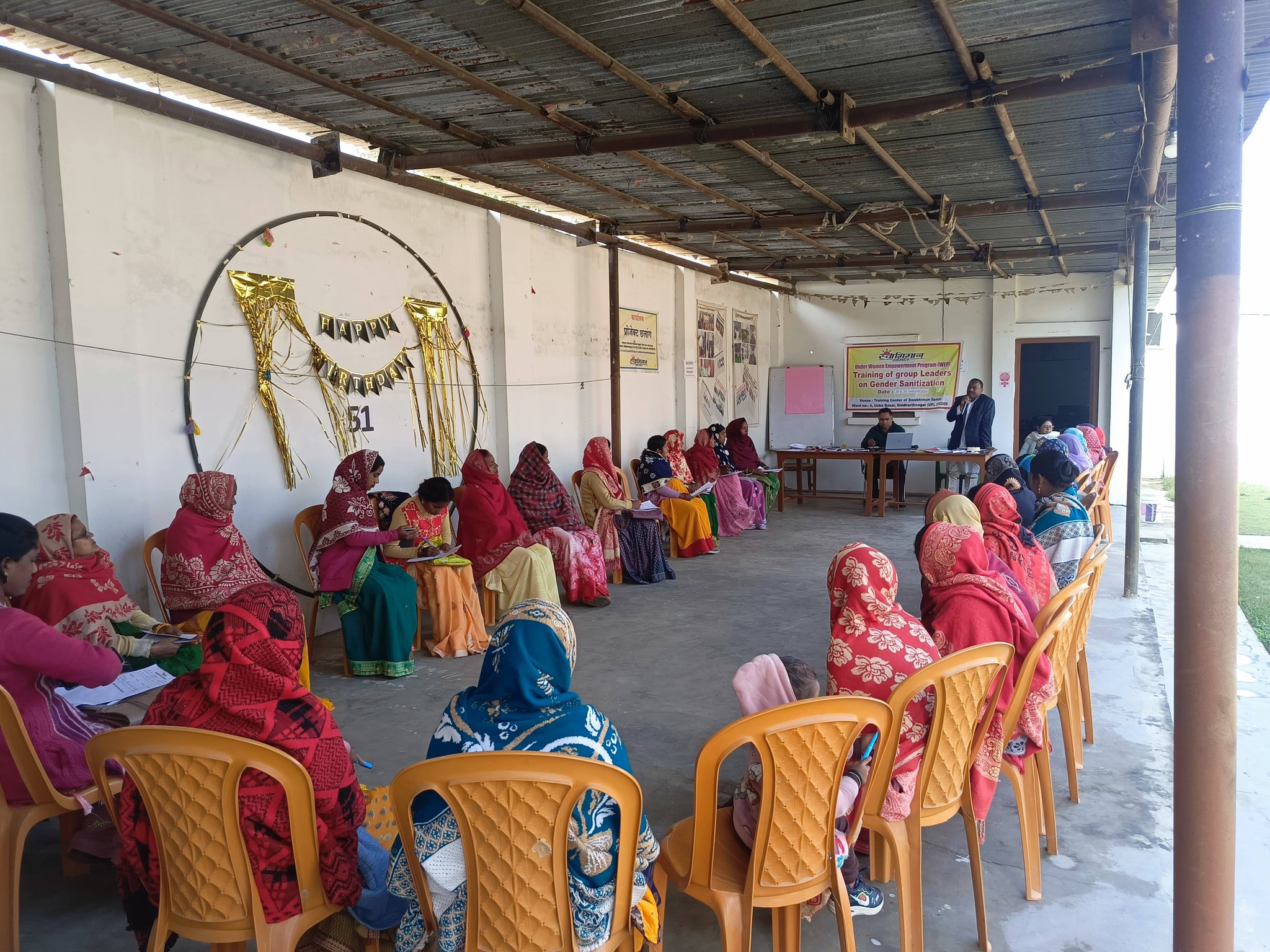
Swabhiman Samiti organized a comprehensive two-day training program on Gender and Leadership on 29–30 January 2026 at its training centre in Uska Bazar, Siddharthnagar (U.P.). The training was designed for staff members and group leaders with the objective of deepening their understanding of gender concepts and strengthening leadership capacities for inclusive and equitable community development.
The program aimed to bridge the gap between theoretical knowledge and practical application, enabling participants to integrate gender-sensitive approaches into their fieldwork and leadership roles.
Participation
A total of 36 participants, including staff members and community group leaders, actively participated in the training. Key participants included Mrs. Mamta Verma (Chairperson), Mr. Vinod Prajapati (Secretary), and Mr. Deepak Arya.
Key Highlights
Objective:
To build a strong foundation of gender awareness and develop leadership skills that promote equality, inclusion, and sustainable social change.
Key Activities and Facilitation
The training commenced with a welcome and orientation session conducted by Ms. Sanju Yadav, who introduced the objectives, structure, and expected outcomes of the program. She emphasized the importance of leadership that is inclusive, participatory, and responsive to community needs.
The sessions were expertly facilitated by Mr. Pravesh Verma, who served as the chief resource person for the training. He delivered in-depth and engaging sessions on gender concepts, beginning with a clear explanation of the distinction between sex and gender, followed by a detailed discussion on gender roles, stereotypes, and inequalities prevalent in society.
Mr. Verma further elaborated on the critical difference between gender equality and gender equity, using real-life examples and field-based scenarios to help participants understand how these concepts apply in practical contexts. He emphasized that achieving true equality requires addressing existing disparities through equitable approaches, particularly in marginalized communities.
A significant focus of his sessions was on linking gender concepts with development outcomes. He highlighted that inclusive development cannot be achieved unless women and girls are given equal opportunities, respect, and active participation in decision-making processes. His facilitation encouraged participants to critically reflect on their own biases, attitudes, and practices in the field.
The leadership sessions conducted under his guidance focused on identifying key leadership qualities such as empathy, accountability, communication, and decision-making. He stressed the importance of gender-sensitive leadership, where leaders actively promote inclusion, fairness, and equal participation within their communities.
The training methodology adopted by Mr. Verma was highly participatory and interactive. Activities included group discussions, role plays, case studies, and experience-sharing sessions, which allowed participants to engage deeply with the content. These methods ensured that learning was not only theoretical but also practical and relatable to real-life situations faced by participants in their work.
Participants were encouraged to share their field experiences, challenges, and success stories, creating a collaborative learning environment. This approach helped in building confidence and fostering a sense of ownership among participants towards applying the learnings in their respective areas.


Impact
The training led to a significant improvement in participants’ understanding of gender issues and leadership dynamics. Participants developed a more nuanced perspective on gender equality and equity, enabling them to approach community challenges with greater sensitivity and effectiveness.
The sessions also strengthened leadership capacities, equipping participants with practical tools and strategies to lead initiatives, facilitate group processes, and promote inclusive participation. The exposure to participatory methods enhanced their ability to engage communities more effectively.
Overall, the training reinforced the role of participants as change agents, capable of driving positive and sustainable social transformation.
Conclusion
The two-day training on Gender and Leadership proved to be a highly impactful capacity-building initiative. The expert facilitation by Mr. Pravesh Verma played a crucial role in ensuring that participants gained both conceptual clarity and practical skills.
The program successfully strengthened the foundation for gender-sensitive leadership within Swabhiman Samiti’s team and community groups, contributing to the organization’s broader mission of inclusive development and empowerment.
Acknowledgment
Swabhiman Samiti expresses its sincere gratitude to Mr. Pravesh Verma for his valuable facilitation and insightful sessions. The organization also appreciates the active participation of all attendees and the efforts of the organizing team in making the training successful.