


Three-Day Training on Family Planning and Reproductive Health Celebration – Swabhiman Samiti, Siddharthnagar
Introduction
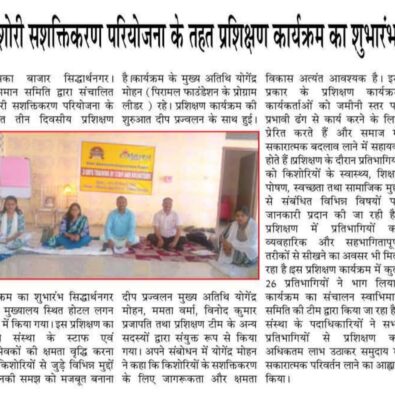
Swabhiman Samiti successfully organized a three-day training program on Family Planning and Reproductive Health from 14–16 March 2026 at Lagan Palace, Naugarh, Siddharthnagar (U.P.). The training was conducted under the Kishori Sashaktikaran Project with the objective of strengthening the knowledge and capacities of staff members and volunteers on critical aspects of reproductive health and adolescent empowerment.
The program aimed to equip participants with accurate information, practical understanding, and communication skills required to address sensitive health issues at the community level.
Participation
A total of 26 participants, including staff members and volunteers, actively took part in the training. Their participation reflected strong commitment towards learning and contributing to improved health outcomes in their respective communities.
Key Highlights
Objective:
To enhance knowledge on family planning, reproductive health, and adolescent issues, and to build the capacity of participants as effective community resource persons.
Key Activities:
The training was inaugurated with a ceremonial lamp lighting by Mr. Yogendra Mohan from Piramal Foundation, along with Mrs. Mamta Verma and Mr. Vinod Kumar Prajapati, marking the formal commencement of the program.
The sessions covered a wide range of important topics, including family planning and birth spacing, various contraceptive methods, the Medical Termination of Pregnancy (MTP) Act and safe abortion practices, as well as awareness on sexually transmitted infections (STIs) and reproductive tract infections (RTIs).
In addition, the training also focused on life skills and adolescent empowerment, enabling participants to understand the broader context of reproductive health within social and behavioral frameworks.
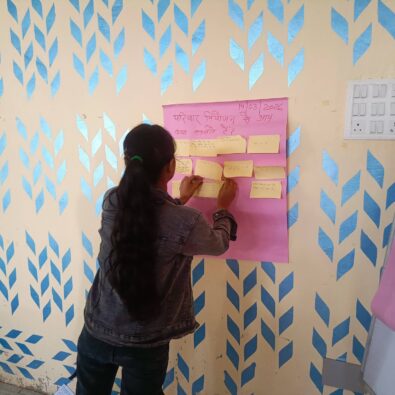
The methodology adopted during the training was highly interactive and participatory. Activities such as group discussions, experience sharing, and the use of a “Question Box” encouraged participants to openly express their doubts and seek clarification in a safe and non-judgmental environment. This approach ensured deeper understanding and active engagement throughout the sessions.

Outcome
The training significantly enhanced participants’ knowledge and understanding of reproductive health, family planning methods, and relevant legal provisions. Participants gained clarity on sensitive issues and developed confidence in communicating these topics effectively within their communities.
The program also strengthened their leadership and facilitation skills, enabling them to conduct awareness sessions and engage with community members more effectively.
Short-Term Impact
As an immediate outcome of the training, participants are now better equipped to act as community resource persons in their respective villages. They will play a key role in spreading awareness on family planning, menstrual health, and adolescent rights.
Their improved communication skills and knowledge will help in addressing myths, reducing stigma, and promoting informed decision-making among women and adolescent girls.
Conclusion
The three-day training program proved to be a highly effective capacity-building initiative under the Kishori Sashaktikaran Project. It not only enhanced technical knowledge but also empowered participants with the confidence and skills required to bring about positive behavioral change at the grassroots level.
Such initiatives are crucial in building healthier, informed, and empowered communities.
Acknowledgment
Swabhiman Samiti extends its sincere gratitude to Mr. Yogendra Mohan from Piramal Foundation for his support and presence during the inauguration. The organization also appreciates the active participation of all trainees and the efforts of the organizing team in making the training successful.
Together, we move towards a healthier and empowered community.