Case Story: Transforming Rice Cultivation with the SRI Method
Blog Details
Home >
Blog >
Case Story: Transforming Rice Cultivation with the SRI Method
case story
Case Story: Transforming Rice Cultivation with the SRI Method
26 Nov 2024 3 min read
Article Details
Introduction
Kisamati Devi, a farmer from Banjarah village in Sohas Janubi Gram Panchayat, is a shining example of how adopting modern agricultural practices can uplift rural livelihoods. With a family of seven, including her husband, three daughters, and a daughter-in-law, Kisamati relied heavily on traditional farming. Despite owning 1.15 acres of land, their dependence on conventional methods yielded low productivity, forcing her eldest son to migrate to the city for work to supplement the family’s income.
Challenges Faced
Low Productivity:
Traditional paddy farming consumed excessive water and fertilizers while yielding low outputs, leaving minimal profit for the family.
Financial Instability:
The limited agricultural income was insufficient, compelling her eldest son to leave for the city to support the household.
Lack of Awareness:
A lack of knowledge about advanced farming techniques restricted her potential to enhance productivity.
Intervention by Swabhiman Samiti
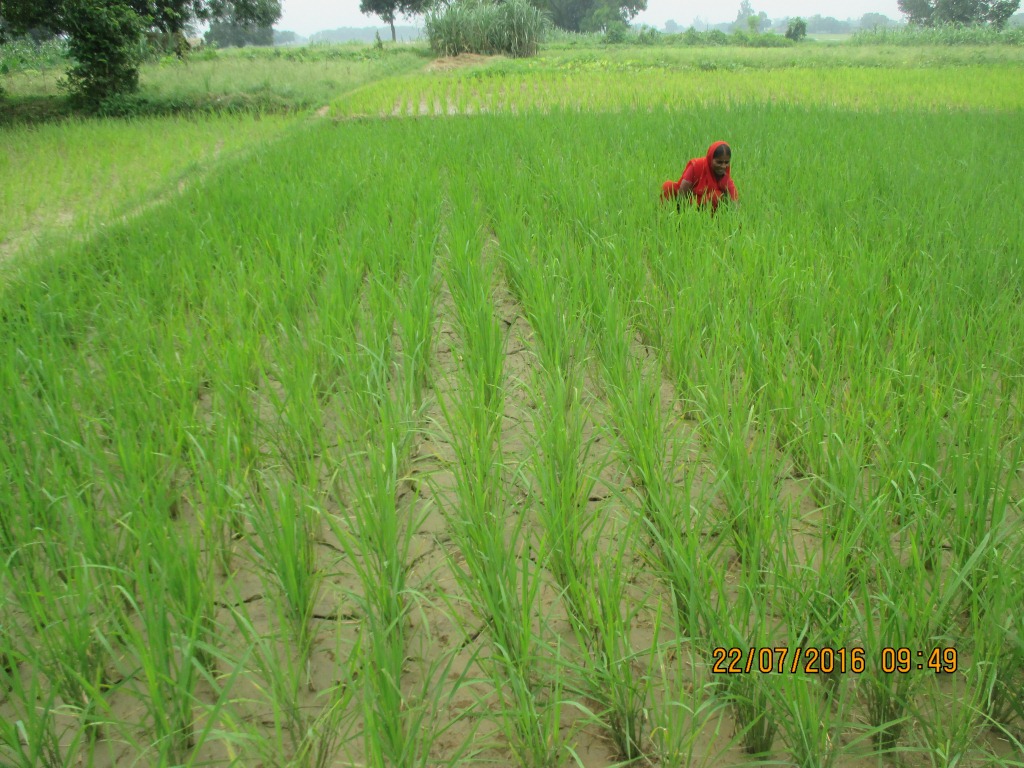
Under the Crop-2 Project, Swabhiman Samiti introduced Kisamati to the System of Rice Intensification (SRI) method, an innovative rice cultivation technique requiring less water and inputs while ensuring higher yields.
Key Steps in Intervention:
Training and Awareness:
Participated in workshops, group meetings, and video demonstrations explaining the SRI method’s benefits.
Guided Implementation:
Provided step-by-step guidance on field preparation, seed spacing, water management, and pest control.
Motivated by the potential of SRI, Kisamati decided to cultivate rice on 0.50 acres of her land using the method.
Implementation and Results
Area Cultivated: 0.50 acres
Cost of Cultivation: ₹6,000
Crop Yield: 18 quintals
Variety Used: Sugandha (aromatic rice)
Key Achievements:
Comparison with Traditional Methods:
The yield from 0.50 acres under the SRI method was equivalent to that of 1 acre under traditional methods.
Expansion into Diversified Farming:
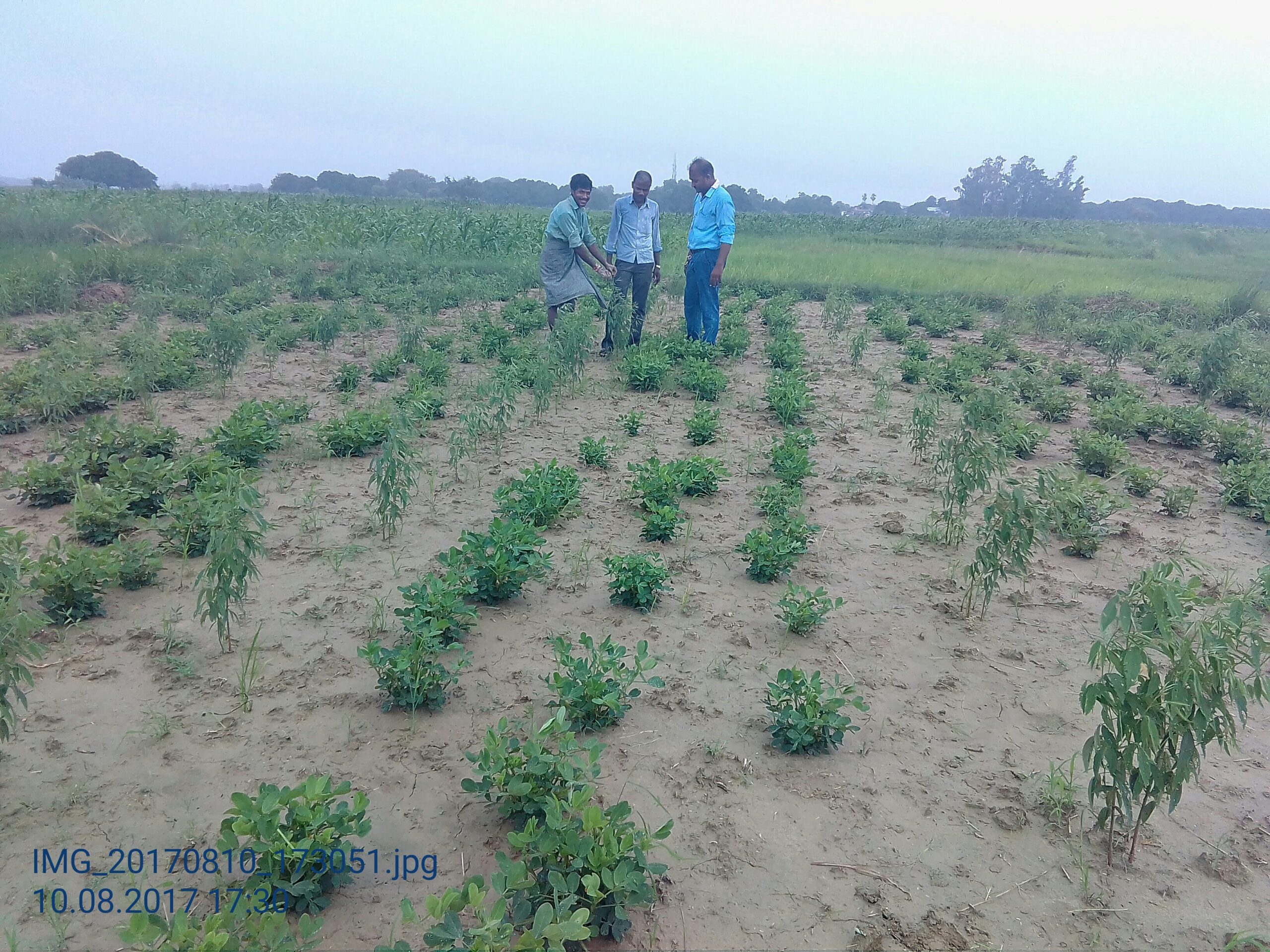
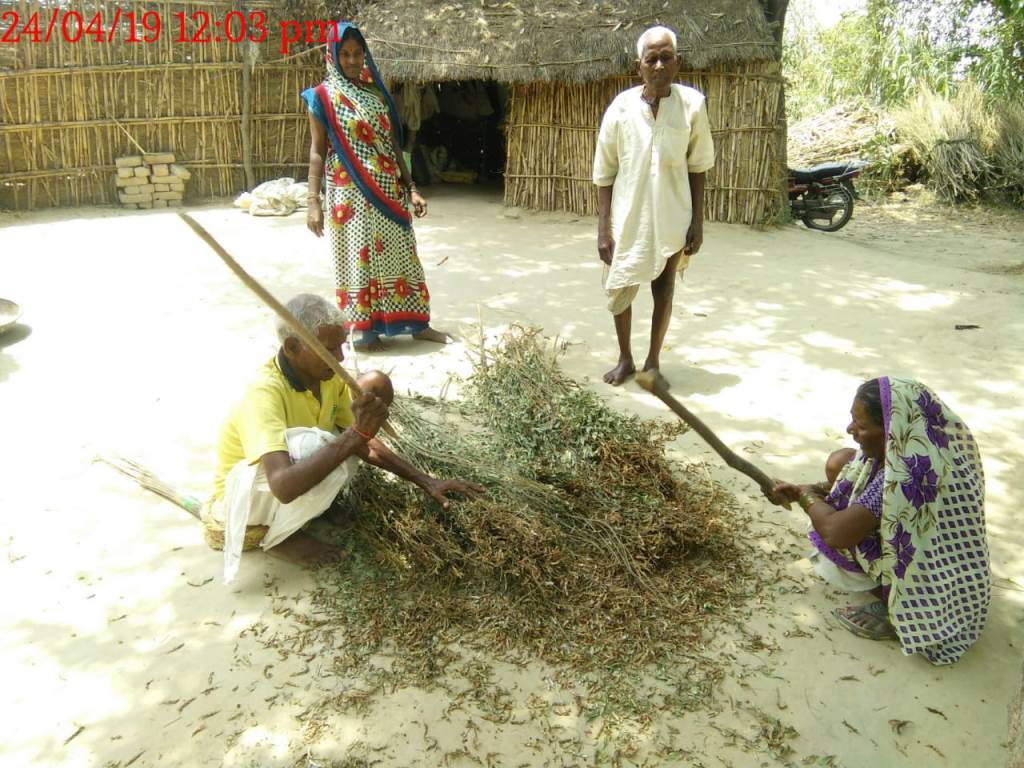
Encouraged by the success, Kisamati utilized the remaining 0.50 acres for pigeon pea cultivation, adding further income streams.
Impact
Increased Income:
The higher yields and reduced input costs significantly improved the family’s financial stability.
Resource Efficiency:
The SRI method minimized water and fertilizer use, ensuring environmental sustainability.
Community Influence:
Inspired by Kisamati’s success, other women farmers in the village began adopting the SRI method, fostering a community-wide agricultural transformation.
Conclusion
Kisamati Devi’s adoption of the SRI method not only enhanced her family’s financial security but also established her as a role model in her community. Her journey underscores the transformative potential of modern agricultural techniques in empowering rural households and promoting economic independence.
Acknowledgment
The efforts of Swabhiman Samiti and the Crop-2 Project were instrumental in equipping Kisamati with the skills and confidence to transition to sustainable and profitable farming practices. Her success story highlights the importance of collaborative efforts in uplifting rural communities.